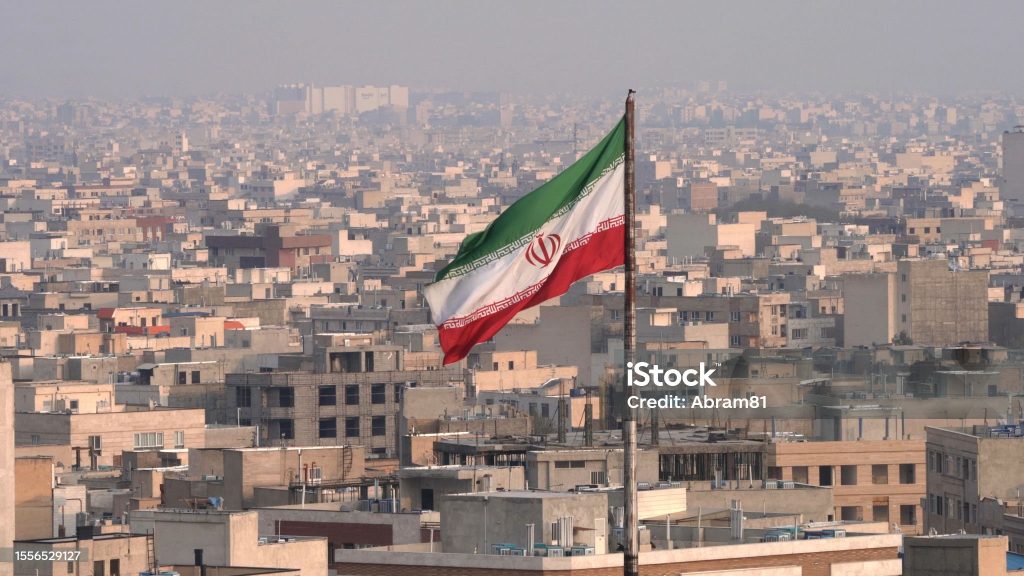
The tendency in America is to look at the Islamic Revolution in Iran through a lens that focuses only on the Hostage Crisis in 1979. As bad as that was, there’s a whole history of what transpired before and after that event that dates back over 130 years to 1891. To understand where they are today it helps to review that history. Here is a timeline breakdown of it.
Tobacco Protest in 1891: As the nineteenth century came to an end the Shia Muslem clergy in Iran had reached deeply into the population and had become influential particularly among the poor in spite of the rule of the increasingly dictatorial Nasir al-Din Shah. In 1890 this Shah granted a full monopoly for 50 years over the lucrative tobacco industry that employed over 200,000 workers to a British Major. Iran’s top Shia cleric at the time, Ayatollah Mujaddid Mirza, issued a fatwa, or judicial decree, to boycott tobacco to protest the Shah’s action. As a result, the industry was practically brought to its knees over the next two years obliging the Shah to rescind the concession. History marks this as the first major resistance by the Iranian population led by a Shia cleric against the rule of the Shah.
Persian Constitutional Revolution 1905-1911: In 1896 Nasir al-Din Shah was assassinated, but the dissatisfaction with the government among the population continued until the period of 1905-1911 known as the Persian Constitutional Revolution. During this time the 1906 Constitution was agreed to and signed by Mozaffar al-Din Shah Qajar, who ruled from 1896-1907. The constitution provided for the National Consultive Assembly or Majlis, the legislative body that was elected by universal suffrage. The constitution also provided for the sharing of power under certain circumstances. But the legislative body did not adequately offset the impact of the Shah’s regime although it did weaken it. Consequently, a struggle arose between the constitutionalists and the Shahs, who had foreign powers backing them.
Reza Shah 1921-1941: The continuing conflicts gave way to the rise of the commander of the nation’s elite troops, General Reza Khan. In a coup in February, 1921, he became Reza Shah ushering in the Pahlavi dynasty. The new regime instituted a number of political and social reforms that flew in the face of Shia Islam, and led to the replacement of Islamic law with more secular Western based law. Being a general gave Reza Shah the wherewithal to use the military to force many reforms on the population—in one case causing a rebellion at the Goharshad Mosque with a death toll credited to Reza’s military of between 800-1200 villagers. The revolt was generated by a Muslem cleric who denounced the Shah’s reforms as heretical, rousting the merchants and other villagers who supported the reforms to seek refuge in the Mosque. After a standoff of several days, out-of-town troops were brought in to crush the resistance. The violent ending resulted in the end of any co-operation and/or collaboration between the Shia clerics and the Shah’s government. Ironically, the British and Russians viewed Reza Shah as too friendly to Nazi Germany, and in 1941 sent armies into Iran to depose him in favor of his son, Mohammad Reza Pahlavi, who became the last Shah in Iran’s history.
The Anglo-Iranian Oil Company and the Coup of 1953: In 1901 a British entrepreneur made an agreement with Mozaffar al-Din Shah Qajar to own a monopoly on all oil discovered in Iran for a period of sixty years. After much money was sunk into the venture searching for oil with no luck, oil was finally discovered in May, 1908. The next year the Anglo-Persian Oil Company (later the Anglo-Iranian Oil Company) was created to develop the country’s oil industry. The industry grew as more reserves were discovered, but the lion’s share of the profits went to Britain, not Iran. In 1952 Iranian Prime Minister Mohammad Mosaddegh nationalized the Anglo-Iranian Oil Company, much to the chagrin of the British who accused him of stealing it. The British considered an armed invasion to take back their assets, but could not persuade U.S. President Harry Truman to support this effort. However, in 1953, Truman gave way to Eisenhower, who was more agreeable with the British plans. In August, 1953, after one failed attempt, another coup attempt was made and Mosaddegh was deposed and placed under arrest. Shah Mohammad Reza Pahlavi then appointed a loyal general, Fazlollah Zahedi as the new Prime Minister, and in so doing strengthened his own position as Shah. What pushed Eisenhower over the ledge was that he wanted Iran, with the Shah in charge, to became a counter-weight to block the chance that post WWII Soviet style communism would spill over into Iran. During this time U.S. oil companies became deeply involved with the development of the industry, taking home about 40% of the profits.
White Revolution 1963-1979: In an effort to weaken political support for the traditional Sharia dominated Iranian culture, Shah Mohammad Reza Pahlavi undertook a series of western style reforms designed to bolster support from the peasant and working classes. Such actions as land reform, sale of state-owned factories, enfranchisement of women, and nationalization of forests and grasslands were undertaken, and the country’s culture began look more like that of its western mentors. Known as the White Revolution, the reforms were also intended to fend off a Red Revolution that could have occurred from meddling by the Soviet Union, Iran’s next-door neighbor. But instead, social tensions arose and the revolution backfired by pushing more of the population into the political opposition led by the clerics. The prevailing fact of the matter was that much of the oil industry profits did not find its way into areas of the country and economy that needed financial support in the form of more jobs, more industries, and social programs to help the working classes and the poor. These western reforms were more secular in nature, and that prompted the Shia clergy to step up its efforts to unite the population against the Shah. As the population became disenchanted with the corruption in government it became more closely aligned with the clergy, and generated the Islamic Revolution that shaped Iranian society that is still in place today.
The Rise of Ayatollah Ruhollah Khomeini 1963-1979: The Ayatollah Ruhollah Khomeini was a leader of the opposition to the White Revolution. In 1963, after denouncing the Shah publicly using strong language he was placed under house arrest and held for eight months before being released. He stepped up his attacks again on the Shah and western reforms until he was re-arrested and sent into exile in Iraq where he remained for fifteen years. During this time, he developed the ideology known as velayat-e fagih, or the guardianship of the jurist. This was meant to say that all Muslims required guardianship to ensure that Sharia law was followed and Islam would be protected from foreign (predominantly secular western) influences. This theory was written into his book, Islamic Government, that became widely accepted and followed as a blueprint for an Islamic Republic. Khomeini was exiled, but that did not stop him from making Mosque sermons and other speeches that were smuggled back into Iran on cassette tapes. At the Shah’s request, the government sent Khomeini towards the end of his exile to a town near Paris, France, in an effort to silence him. This trick backfired as in France he could take advantage of much more advanced media avenues than in Iraq, and his word was more widely spread than ever before.
The Tidal Wave of Protests 1978-1979: While in exile Khomeini set the tone for revolution by declaring that revolt and martyrdom were indeed a part of Shia Islam. He further declared that Muslims must reject the influences of either the secular Western countries or communist countries. From 1970 to 1978, the Shah and foreign oil magnates enjoyed a quantum leap in the price of oil worldwide spurred on by OPEC (The Organization of Petroleum Export Countries) who taught most Middle Eastern Oil Sheikdoms the value of leaving oil in the ground and sharing production quotas to achieve higher prices. This burst of oil revenue in Iran helped out the Shah along with his cronies and other upper-class families with massive amounts of extra cash. Further cultural shifts carried out by the Shah and the government and the failure to trickle down the national wealth to the poorer sectors was not ignored by religious leaders as well as other political interest groups. Protests of all different stripes occurred. Writers protested for freedom of expression. The Shah’s secular opponents got together secretly to denounce the Shah’s liberalization policies. Khomeini’s oldest son died under mysterious circumstances sparking a wave of religious mourning ceremonies, and public protests. On January 7, 1978, in the holy city of Qom seminaries were closed and the next day the students rallied in front of the religious leader’s homes, followed by a huge protest that was crushed by the Shah’s troops using live ammunition. Waves of protests occurred as the deaths of as many as 300 students from the seminaries were commemorated in Mosques and other religious gatherings. Over a month later more protests broke out in the City of Tabriz and other smaller cities some of which turned violent. All in all, the protesting reached fifty-five cities in Iran. The protests spilled over into strikes by workers in the oil industry. The Shah resorted to martial law, but that did not prevent any other violence from occurring. In October, street demonstrations took place without interference by the military which was instructed not to cause any more deaths. On November 5, Tehran University was completely shut down by protests, one of which became deadly after a fight between students and soldiers broke out. These are only some of the protests—there were many others.
The Shah Departs and Khomeini Returns from Exile February, 1979: On January 16, 1979, the Shah left Iran ostensibly to get medical treatment for cancer. It was in reality an abdication. Before the Shah departed, Shapour Bakhtiar was officially appointed prime minister as a caretaker leaving the sense that the Shah would return once his health improved. The news of the Shah’s departure launched spontaneous joy among the population as millions of people rejoiced in the streets and removed any public remembrance of the monarchy. On February 1, 1979, Ayatollah Khomeini returned from exile to the welcome of millions of Iranians in Tehran. At first Bakhtiar and other politicians welcomed Khomeini believing that some form of coalition government would arise. But Khomeini and his allies had set their course to establish an Islamic Republic and elbowed out all opposition that stood in the way. Bakhtiar, however, did not move over as easily as most other politicians, and made speeches to make it known that as prime minister he was the legitimate leader of the Iran. On February 5, he further declared that a provisional revolutionary government existed, and so he could act as the supreme leader of it, he appointed another politician to replace him in the prime minister’s role.
Armed Conflict 1979: With two strong factions vying for power, it would be up to the military to determine who should be ruling by coming down behind one side or the other. Khomeini struck first by calling for demonstrations to occupy the streets throughout the country. Bakhtiar became increasingly isolated as members of his established government crossed over to Khomeini’s side. The military was in disarray with the leadership uncertain as to which side should be recognized as legitimate. On February 9, hostilities broke out as air force technicians revolted in an airbase on the outskirts of Tehran. The government’s elite troops, the Immortal Guards, were sent in to put the revolt down, but an armed battle broke out. The technicians were soon supported by angry crowds and also armed guerilla fighters who attacked a weapons factory and stole as many as 50,000 automatic weapons arming some of the mobs. Now armed, the mobs went to attack police stations and other military bases in the area to take them over. To avoid wider bloodshed the general in charge of the Immortal Guards decided not to bring in more of his 30,000 troops to crush the rising rebellion. A few days later on February 11, the Supreme Military Council declared itself to be neutral in all political disputes, ending the bid by Bakhtiar to counter the rise of Khomeini with an extension of the traditional government.
The Hostage Crisis 1979-1981: Late in October, 1979, the self-exiled Shah was allowed to enter the United States for medical treatment for his cancer. This caused a hue and outcry by both Khomeini’s supporters and leftist groups who demanded that the Shah be returned to Iran to be tried and executed for his crimes. On November 4, 1979, a large group of youthful Islamists who were loyal to Khomeini invaded the U.S. Embassy in Teheran and seized control. Their motive was leverage to force the U.S. to return the Shah to Iran in exchange for release of the hostages, but they were also afraid of another U.S. backed coup that would re-install the Shah, or replace him with an anti-revolutionary figure. Khomeini backed the seizure, and when a rescue attempt was stymied by a sandstorm in the desert, the seizure’s legitimacy was confirmed in his mind as endorsed by Allah. The hostages were eventually released 444 days later in January, 1981, but the event bore the indication that the Islamic Revolution in Iran was highly radicalized, and dealing with the leaders diplomatically would be very difficult for any Western country.
The Iran-Iraq War 1980-1988: In the revolution’s early days, there was a great demand both inside and out of Iran for the overthrow of the remaining monarchies in the Middle East with the idea that they would be replaced by Islamic Republics. This was not overlooked by Saddam Hussein, the president of Iraq, who was another Middle Eastern strongman. In September, 1980, he launched a full-scale invasion of Iran with the intention of annexing land around the Shaat Al-Arab waterway that separated the two countries. Hussein hoped to maximize his advantage of having a more modern army, and Iran being stuck with having to deal with Britain and the United States for replacement parts for its war machine. But this attack only galvanized the Iranian population all the more behind the Islamists who had taken over the government of the country. Hussein gained ground early in the siege, but Iranian forces turned the tide two years later and began to push the Iraqi forces out. The war continue six more years until a peace agreement was signed. Although costly and in some parts devastating, the war only further galvanized the Iranian population into the iron grip of Khomeini and the Islamists.
The 1981-1982 Massacre: During the course of the revolution Khomeini and his cohorts took advantage of a host of other revolutionary organizations who assisted him in his rise to the top. But all the way up Khomeini claimed the achievements for himself, disregarding or disavowing the work of the other splinter groups through his control over the media. He took it a step further in June, 1981, by conducting a purge of any groups that did not fall directly into his paradigm of what an Islamic Republic should be. This purge lasted until March, 1982, and led to the massacre of nearly 3,000 of these activists who were mainly young students age eleven to twenty-four. Kangaroo courts were set up to convict these victims of such crimes as “corruption, espionage, terrorism, or enmity against Allah”. All were deemed to be political dissidents. The victims were often tortured before execution. Two years later a United Nations report on the massacre labeled it as “genocide”.
The Role of Iran’s Parliament Before and After the Revolution: Iran’s Parliament continued after the fall of the Shah and the rise of Khomeini. However, it was transformed from the Shah’s puppet gallery into what became the “Islamic Consultive Assembly”. The Shah appointed half of the Senate directly, and the Majlis was elected with near-direct supervision from the Shah who permitted only one legal political party to run for a seat in either house. After the revolution, the Senate was abolished but the Islamic Consultive Assembly was elected every four years. The duties were similar before and after: pass legislation, approve budgets, ratify treaties, and watch over the government. The parliamentary candidates were still required to be approved by the Islamists, but the Supreme Leader (Khomeini) had the same ultimate authority throughout the country as the Shah.
Conclusions: For at least 130 years the people of Iran have been battered back and forth from one revolution to another, stemming from the high-handed actions of the various Shahs to the high-handed actions of the various Ayatollahs. Then there was the quantum leap into democracy in 1906 that seemed to offer the promise of government by the people until they looked around to see that the Parliament was nothing more than the Shah’s cabinet of cronies. After much violence the Shah dynasties were permanently replaced by Islam Clerics with the same amount of ruthlessness, and the Parliament became nothing more than the Islamic Clerics’ lackeys.
Sources: Wikipedia, Iranian Revolution.
A&E Television Networks, What Led to the 1979 Iranian Revolution? by Nate Barksdale, June 26, 2025.
ChatGPT.
Great job with this Dave!
Thank you for this very detailed article on IRAN.
When I first moved to Los Angeles in the late 70s, I had a simple job at a film company that produced pictures and films for the Studios. In the front office, I had a good friend who happened to be from Iran.
After the Ayatollah took over around 1980 or so her husband insisted that they returned to Iran .. We tried to keep in touch with letters, but soon after I never heard from her again and felt like her life had changed forever .so sad