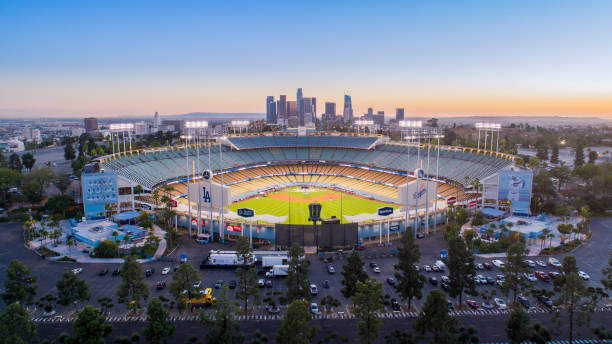
It Began Earlier Than You Think: Legend has it that the American game of baseball was invented by Abner Doubleday, in Cooperstown, New York, during the summer of 1836. It isn’t clear where this legend came from or when it actually surfaced, but the truth in all matters is that the legend is false. Abner Doubleday was a cadet at West Point during the summer of 1836, and according to their records did not take any leave to visit Cooperstown. Further, it is not verified that he ever went to Cooperstown. Evidence points to baseball in its forerunning forms being played in America as early as March, 1786, via an entry in the diary of a Princeton student, John Rhea Smith: “A fine day, play baste ball in the campus but I am beaten for I miss both catching and striking the ball.” Even before that in the 1760’s, Harvard student Sydney Willard wrote, “Here it was that we wrestled and ran, played at quoits and cricket, and various games of bat and ball.” In 1791 the town of Pittsfield, Massachusetts banned the game of baseball and other games, from being played within 80 yards of the town meeting house. In 1816 the town of Worcester, Massachusetts outlawed playing baseball in the streets. But the game dates back even further across the Atlantic. In the National Baseball Hall of Fame and Museum in Cooperstown, there is a reference to paintings on the walls of caves in Egypt dating to antiquity that show young people throwing a ball and attempting to hit it with a stick or club.
It Came From England: There are at least ten folk games in Britain and Europe that were commonly played in pre colonial times that involved some form of activity that can be traced to American baseball. The ones that stand out the most are cricket and rounders. Cricket, still very popular in the British Commonwealth, can be traced in history as far back as 1550. Rounders has many of the same activities as baseball, including hitting a pitched ball with a club and then running counter-clockwise around a series of bases touching each one to score a point. The game further featured a bowler (pitcher), a backstop (catcher), four players to cover the bases (infielders), and three deep fielders (outfielders) for a total of nine. Rounders is still very popular among young people in the U.K. and was played by as many as 7 million in 2015. Early settlers to North America brought these and other games with them, and they were commonly played in various forms without any widespread organization until the mid-nineteenth century. There is even a game called British Baseball that falls into the same category as rounders that is still played in parts of England and Wales.
The Knickerbocker Club Rules: The transformation of baseball into an organized sport took a major turn in September of 1845, when the New York Knickerbocker Baseball Club was founded and a series of rules were codified. One of the founding members, Alexander Cartwright, is considered to be “the father of baseball” but the actual rules were written by William R. Wheaton and William H. Tucker, two officers of the club. The Knickerbocker Rules formed the foundation of today’s rules, although more evolution was to take place. For example, overhand pitching was illegal, strikes occurred only if the batter swung and missed, a batted ball that was caught on one bounce was still considered an out, and the game lasted until one team reached the score of 21. The rules further required a baserunner to be tagged with the ball to be called out while off base, rather than hit by the ball itself thrown by the fielder. Foul lines were established and batters and baserunners were not allowed to advance on a batted ball that went in foul territory. Even still, these rules did not define such items as the number of players on each side, the different positions, the direction of base running, and that a run counted when the runner came back around to touch home plate. In 1953 Congress gave credit to Cartwright for inventing baseball, but there has been widespread disagreement as to this end. The rules themselves had been in place with other New York area baseball clubs for some time before being codified by the Knickerbocker Club. Wheaton himself in a newspaper interview in 1887 stated that the Gotham Baseball Club, of which he was a founding member in 1836, used the same and similar rules. He said that the necessity existed of reducing the rules to written format, and that the job of doing that came to him eight years before the formation of the Knickerbocker Club.
The Establishment of Professional Leagues: As the game rose in popularity a group of baseball clubs in the New York area sought in 1855 to form a governing body. This effort failed, but the clubs did meet two years later in a convention to standardize the rules. With the Knickerbocker Rules as a starting point, they added such basics as ninety-foot basepaths, nine players per side, and force outs at any base. Two years later this led to the formation of the first governing body: the National Association of Baseball Players (NABBP), that governed the game until 1870, but did not sanction or schedule any individual game matchups. In 1858 the first game was played that required paid admission to watch, drawing a crowd of nearly 4,000 fans. Baseball spread during the Civil War owing to the widespread movement of soldiers and prisoners who took the game with them. After the war it became common place for baseball players to receive payment for playing even though they were considered amateurs. In an effort to stem this corruption the NABBP decided to permit the establishment of profession teams. This caused the sport to grow even faster as the Cincinnati Red Stockings became the first professional team in 1869, picked up the best players nationally, and toured the country without losing a game until 1870. This success pushed the NABBP to give way to the creation of the National Association of Professional Base Ball Players in 1871, that morphed into the National League of Professional Base Ball Clubs in 1876. The National League became the oldest professional sports league in the world and still is active to this day. It was followed by other professional leagues, but was joined by the American League in 1901 to form Major League Baseball to feature the top professional players.
Conclusions: In my days as a computer systems consultant, I met and became friends with numerous people from India who were avid cricket enthusiasts. I invited two of them to a baseball game one night. Although they still preferred cricket, their curiosity about baseball led them to ask how the game got started. My response was that a group of young people in the early days of this country wanted to play cricket, but did not have all the equipment or understand the rules. So, they made up a variation of cricket and opened it up like the game of rounders to permit more participants. They simply made up their own rules as they went along.
Sources:
The History Channel, Who Invented Baseball, History Staff, May 28, 2025 version.
Wikipedia, Origins of Baseball.